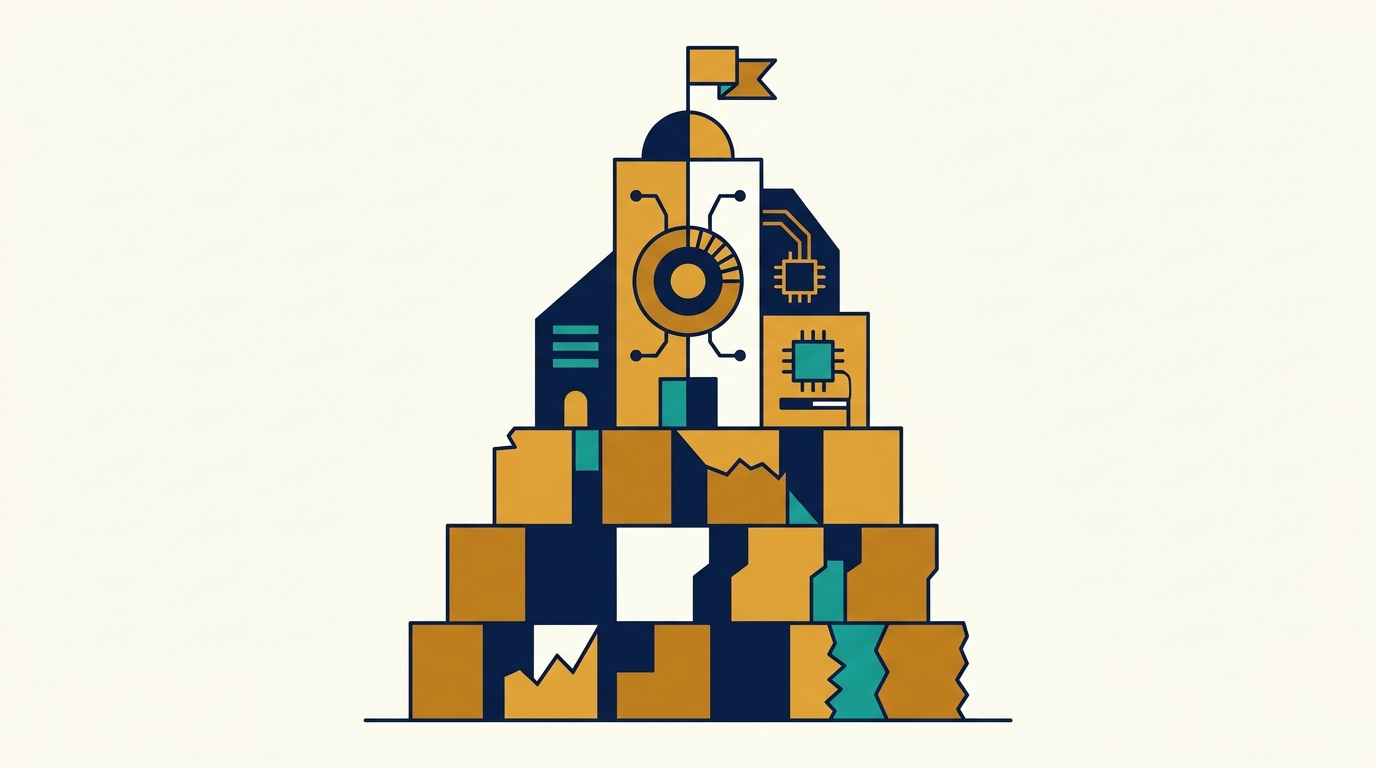
"We need to fix our data first."
This comes up in almost every AI strategy conversation. It sounds responsible. It sounds prudent. And it's costing organisations millions in delayed value.
The idea that you need perfect data before you can start with AI is one of the most expensive myths in enterprise technology.
Where the myth comes from
The data readiness myth has respectable origins. Traditional analytics and business intelligence genuinely do require clean, well-structured data. If your reporting data is wrong, your reports are wrong. Can't argue with that.
But AI isn't traditional analytics. Modern AI systems, particularly large language models and machine learning at scale, are designed to work with messy, incomplete, and imperfect data. That's what they're built to handle.
The myth persists because it feels safe. "We're not ready yet" is an easier position to defend than "Let's start now and iterate." It avoids risk. It also burns through budgets while producing precisely nothing.
The real cost
I worked with a financial services firm that had spent 18 months and about £3M on a data quality programme before starting any AI work. They cleaned data, built governance frameworks, hired data stewards, and created a data catalogue.
By the time they were "ready," two competitors had already deployed AI-driven customer insights and were gaining market share. The data was ready, but they had a lot to catch up.
What data readiness requires
I'm not saying data doesn't matter. It absolutely does. What I'm saying is that the bar for "ready enough" is much lower than most organisations assume.
Tier 1: Good enough to start (weeks, not months)
You need data that's accessible, adequately understood, and connected to a real business problem. It doesn't need to be perfect, but it needs to be available. Most organisations already have this for at least three or four high-value use cases.
Start here. Learn what your actual data gaps are from experience, not from theory.
Tier 2: Good enough to scale (3 to 6 months)
Once you've got a working prototype, you'll know which data quality issues matter and which don't. Fix the ones that matter. This targeted approach costs much less than a blanket data quality programme and delivers results faster.
Tier 3: Good enough to optimise (ongoing)
As your AI capabilities mature, your data requirements become more specific. This is when you invest in advanced data governance, real-time pipelines, and sophisticated quality monitoring. But you invest based on proven needs, not hypothetical ones.
The parallel path
The organisations succeeding with AI do two things at once. They improve their data and they build AI capabilities in parallel. They don't wait for one to finish before starting the other.
Think of it like renovating a house while living in it. You don't move out for two years while every room gets rebuilt. You fix the kitchen first because that's where you spend the most time, and you work around the scaffolding elsewhere.
Fix the data that matters for your highest-value use case. Start building. Learn. Adjust. Repeat.
How do you ensure this
If someone in your organisation is arguing for a "data first" approach, ask these three questions:
What specific AI use case are we delaying, and what's the cost of that delay? If you can't quantify the opportunity cost, you can't justify the wait.
What's the minimum data quality required for a meaningful prototype? Not production. Not perfect. A prototype that tests the hypothesis.
Can we improve data quality and build AI capabilities in parallel? The answer is almost always yes.
It's the organisations that learn fastest that win with AI, not the ones with the cleanest data. And you can't learn from a data catalogue alone. You learn by building.